Jacek Bunsch
What the thunder said
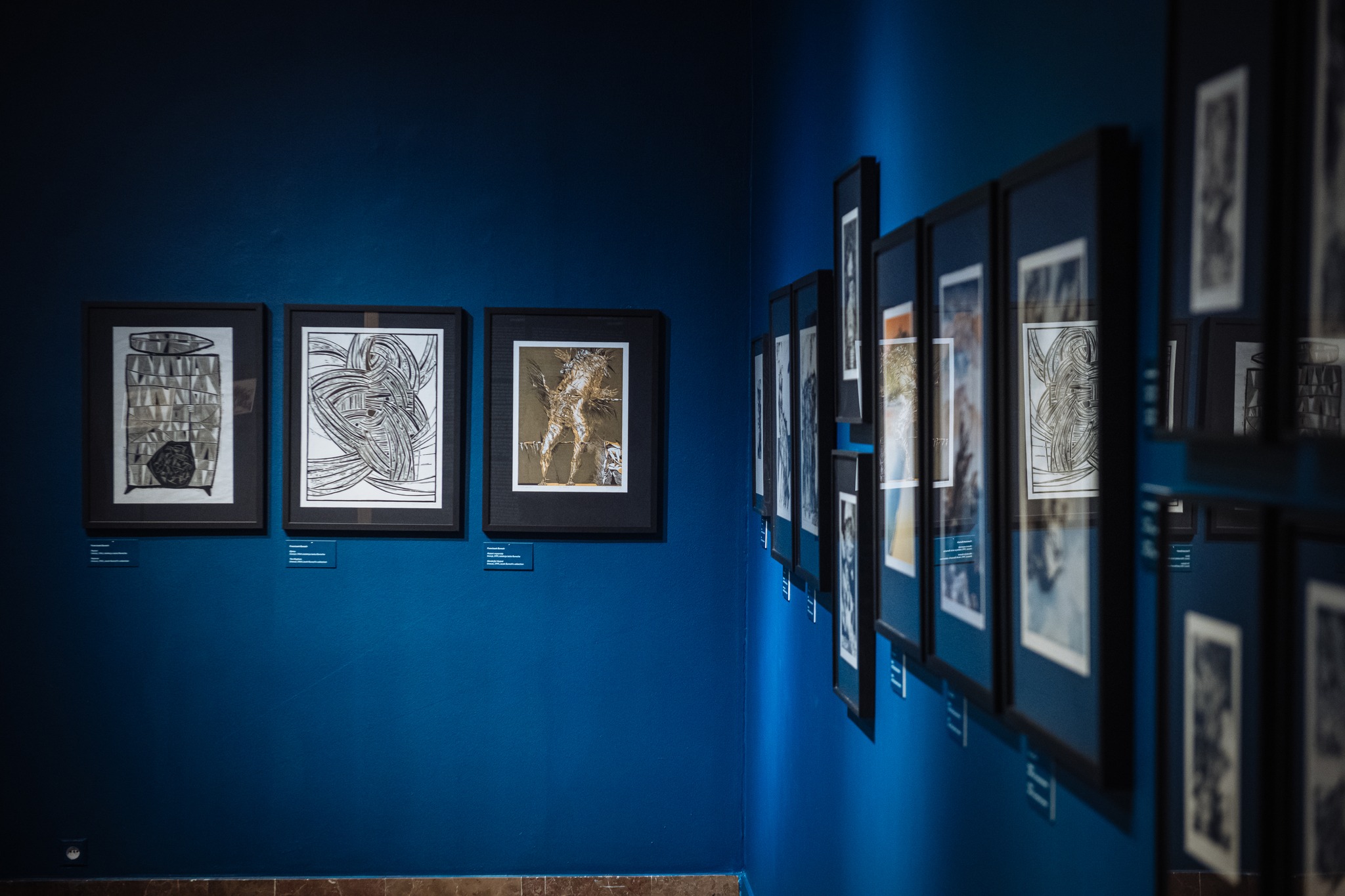
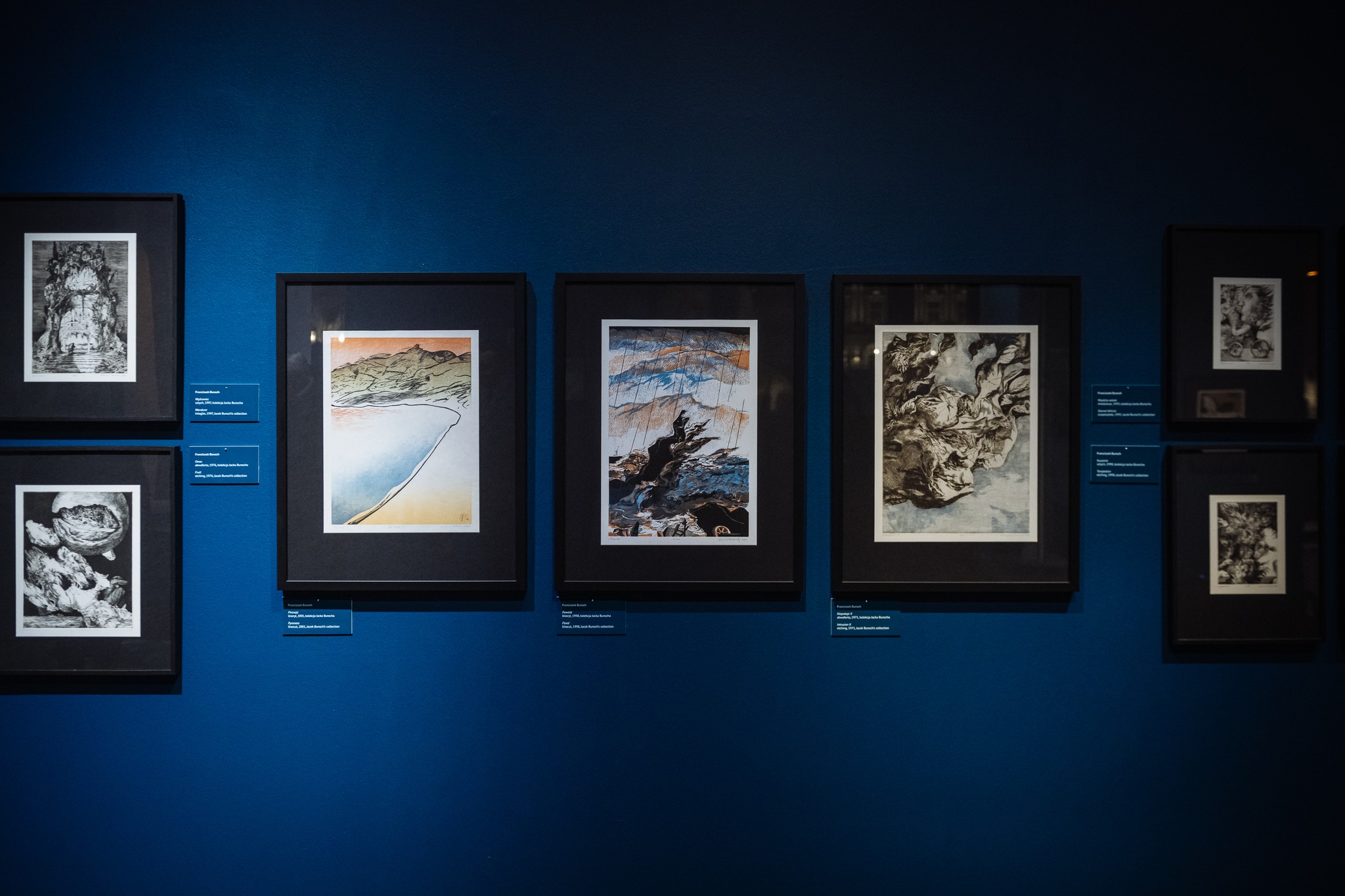
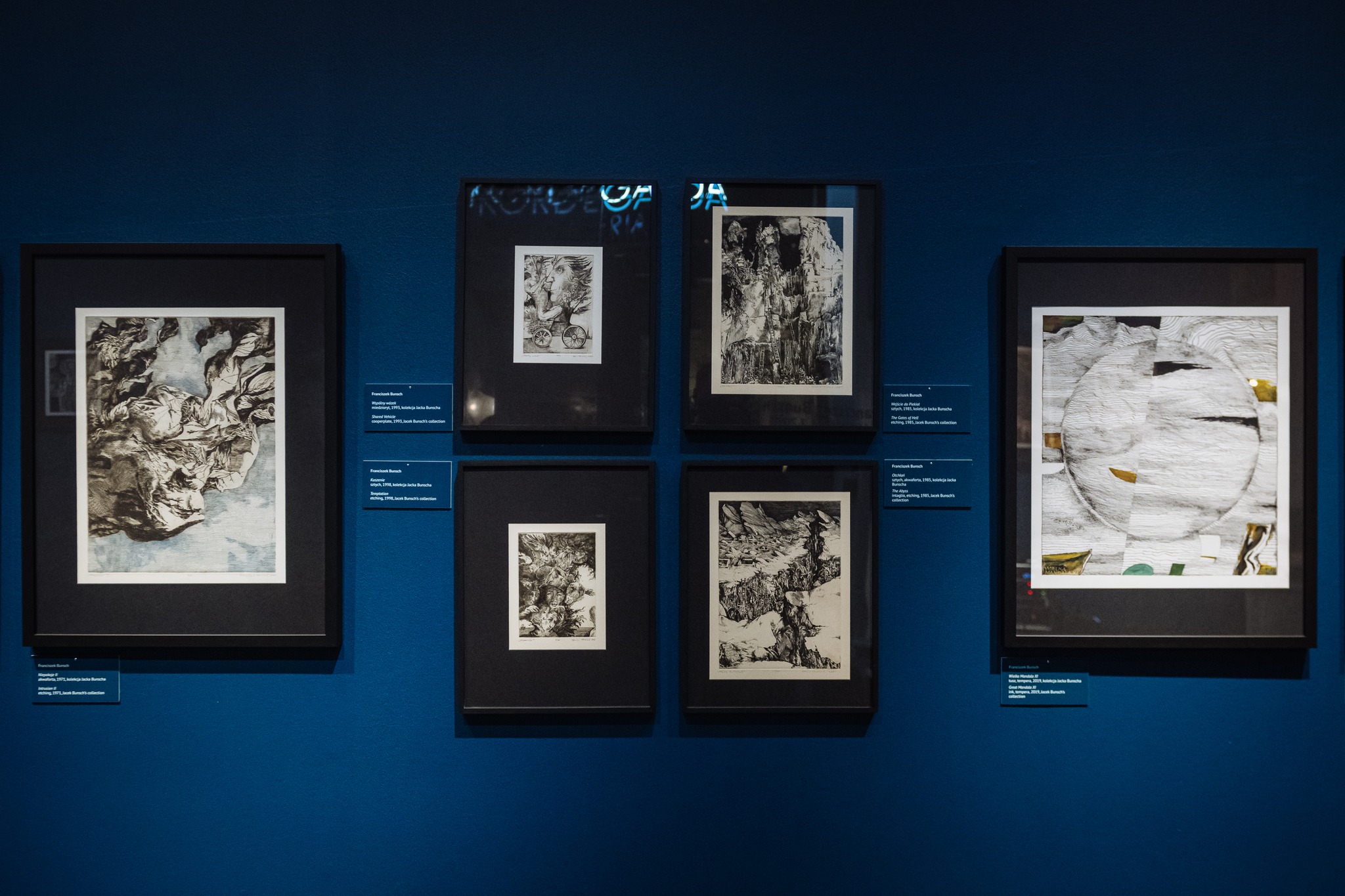
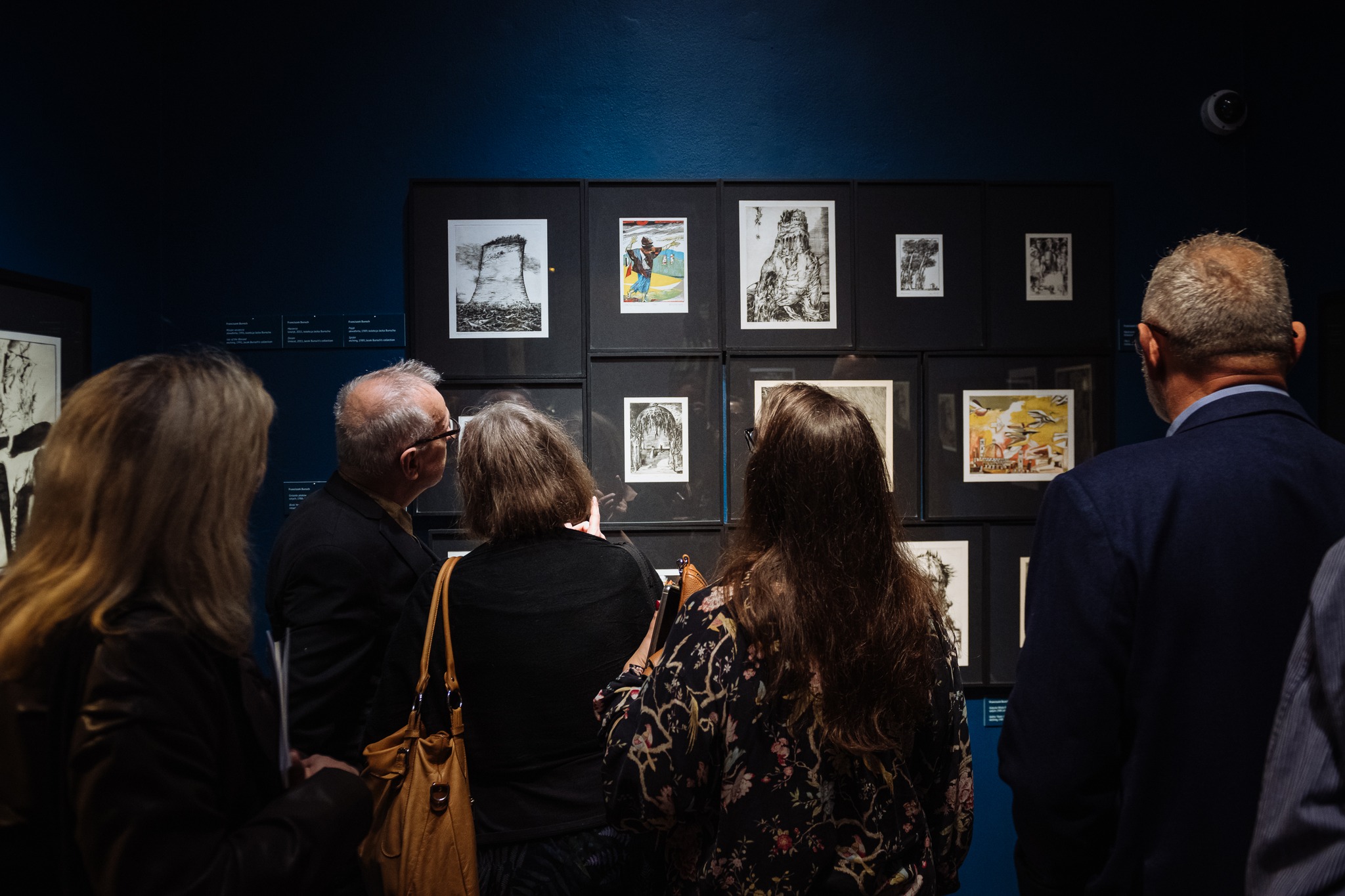
What the silence said? This is a paraphrase of a quote from T.S. Eliot’s poem The Waste Land, which was one of the most important texts for Franciszek Bunsch’s work. A graphic plays out silently in the limited space of the paper. Thunder strikes here in silence, joy or tragedy plays out silently. An image may be a meditation, revealing drama or poetic metaphor. For the generation of Franciszek Bunsch, the belief that the word is the same as the image was self-evident. The image and the word are parallel and equivalent embodiments of human thought.
“Yes, Bunsch is a true representative of his great generation … He wants to enchant us and, perhaps, to charm us with the imagination and beauty of his works, with their mood and the sophistication of his artistic work, the precision of his line, the subtlety of his sparingly applied colour. And he succeeds at that. With a certain excess even, the artist’s works, be they woodcuts, metal techniques or paintings, inspire in us the respect due to Meisterstück, things of masterly workmanship.1”, wrote Jerzy Madeyski. It is worth deciphering the generational aspect of these sentences. The generation born around the 1920s had incredibly difficult experiences, affected by the war, the occupation, post-war poverty, the isolation of the country under communism, martial law and, finally, their last years, when they were resented for having lived at all before 1989.
In the Krakow milieu, the formative artistic experience of this generation took place in two stages – training at the occupation Kunstgewerbeschule and, after the war, meeting students from all over the country who had survived the ordeal of war, at the renewed Krakow Academy of Fine Arts.
The history of the Kunstgewerebeschule is one of the strangest stories about the educational experiences of young people during the war and occupation. On 14 December 1939, the German occupation authorities closed the Academy of Fine Arts. The Institute of Visual Arts was evicted from the Industrial School building to the workshop building on Wenecja Street. Former teachers (including Witold Chomicz, Wacław Krzyżanowski and Ludwik Wojtyczko) were employed, and Wiesław Zarzycki became director for a short time. A vocational school was established with the name Staatliche Kunstgewerbeschule – Institute of Visual Arts 2 Wenecja Street.
On 1 September 1940, the school was moved to the building of the abolished Academy of Fine Arts. Prof. Friedrich Pautsch, the pre-war former two-time rector of the Academy of Fine Arts in Krakow, became the headmaster, under the supervision of the German director. In addition to the existing lecturers, professors from the pre-war academy were recruited, including Władysław
Jarocki, Stanisław Kamocki, Józef Mehoffer, Fryderyk Pautsch, Ignacy Pieńkowski, Stanisław Popławski, Alfred Terlecki. The General, Decorative Painting, Graphic Design, Interior Design, Textile, Ceramics, Sculpture and Metal Departments were created.
In March 1941, NSDAP activist, SA-Brigadeführer, sculptor Wilhelm Heerde – an enigmatic figure, because, according to reports, he favoured Polish professors – became the head. The name of the school was then Staatliche Kunstgewerbeschule-Krakau – State School of Arts and Crafts-Krakow, and in its last year of operation: Staatliche Handwerker und Kunstgewerbeschule Krakau. From 1941, the Krakow Workshop was organised. The situation at the front led to a tightening of policy in the occupied countries and, from January 1943 onwards, further departments of the school were closed down, and the school itself was abolished on 31 March 1943, two months after the defeat at Stalingrad.
Looking at the list of students today, one cannot help but get the impression that it was indeed a “formidable bunch”. Just to mention the most important names – later painters: Tadeusz Brzozowski, Ewa Kierska, Zbigniew Kowalewski, Edward Krasiński, Janina Kraupe, Jerzy Kujawski, Kazimierz Mikulski, Jerzy Nowosielski, Jan Szancenbach, graphic designers: Franciszek Bunsch, Adam Hoffmann, Jerzy Panek, Zbigniew Rychlicki, set designers: Ali Bunsch, Bolesław Kamykowski, Lidia Minticz, Jerzy Skarżyński, actors: Bronisław Pawlik, Marta Stebnicka, film director Wojciech Jerzy Has, art historians: Mieczysław Porębski and Marek Rostworowski, critic Andrzej Kijowski.
The programme of the Faculty of Decorative Painting, where Franciszek Bunsch studied, not only reproduced the structure of the studios of the Academy of Fine Arts, but over time took over the teaching functions of the academy. A course in art and cultural history was taught in all departments. At the same time, students set up a “library point” in Adam Hoffmann’s flat, reading Gombrowicz and Witkacy, Kafka, Thomas Mann, Proust, Diderot’s Jacques the Fatalist or Jarry’s Ubu Roi. Poetry from Dante to Rimbaud, Baudelaire, Breton and the writings of the Surrealists were important readings. Art history lectures were given by Mieczysław Porębski, and Jerzy Kujawski introduced his colleagues to the art of Picasso, then made them fascinated with Surrealism.
The literary topos of the myth of Odysseus proved remarkably enduring. A great influence was exerted by the performance of Tadeusz Kantor’s underground Independent Theatre, The Return of Odysseus by Wyspiański, which anchored this ancient metaphor in the present day. Franciszek Bunsch witnessed the performance. In his memoirs, he repeatedly expressed the strength of his impressions of this underground event.
However, it is easy to see that Kantor’s Eternal Wanderer and the figure of the wanderer in
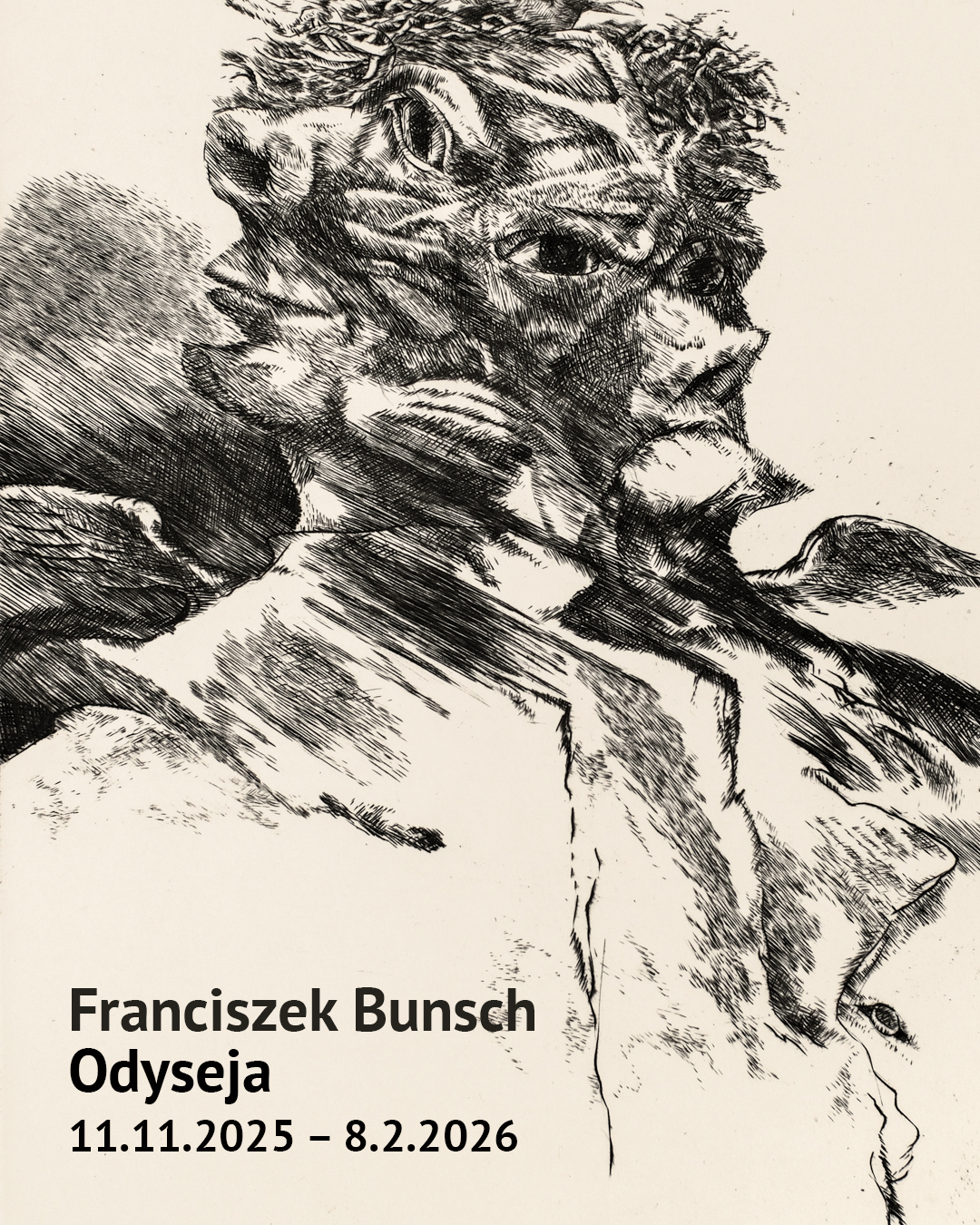
Bunsch’s prints are two completely different characters. The wanderer is an everyman, contemporary and timeless, a witness to cruel and often absurd phenomena, condemned to fate but not reconciled to it, like Joseph K. in Kafka’s Trial. Bunsch’s Odysseus was becoming a man trapped by destiny on the paths towards the abyss from Dante’s Divine Comedy.
After the Kunstgewerbeschule was closed, the students scattered along the dark roads of the occupation-time night. Franciszek Bunsch contracted severe tuberculosis which almost took his life, Zbigniew Grochot died in Gross-Rosen, Marek Rostworowski was arrested by the Gestapo and sent to a concentration camp, Jerzy Kujawski fought in the Warsaw Uprising. Others, in order to survive, worked beyond their means and even became louse-feeders.
In 1945, following a proclamation by the rector of the recovered Academy of Fine Arts, Eugeniusz Eibisch, many former students of the Kunstgewerbeschule came to support him, including the still-unhealed Franciszek Bunsch. The halls were cleaned, Szancenbach and Kamykowski glazed the windows. A multitude of wanderers from many sides of the war met there. They included Andrzej Wajda, Andrzej Strumiłło, Andrzej Wróblewski, Józef Tarasin, Aleksander Kobzdej and many others…. It was the second formative experience of this generation, which began its next journey in increasingly difficult times with optimism.
The landscape that the wanderer traverses in his perpetual need to travel does not fill him with joy; rather, it reveals Eliot’s The Waste Land. The world can be beautiful, but for a short while. Even the happy islands prove unattainable, existing perhaps only on maps, and if they emerge from the sea’s depths, they are too high and rocky to be conquered, and the eternally closed gate of paradise has grown so old that it has rusted and overgrown with weeds.
Franciszek Bunsch’s wanderer is Odysseus, who roamed for a long time along the winding roads of life, but will never return to Ithaca because it no longer exists. Reaching the end of the labyrinth, he sees that there is only nothingness beyond. Nevertheless – Navigare necesse est…2
1. J. Madeyski, Malarstwo Franciszka Bunscha, [in:] Franciszek Bunsch. Grafiki – tempery, Kraków 2001, pp. 11-14.
2. Navigare necesse est, vivere non est necesse – to sail is necessary; to live is not necessary, a Latin maxim attributed to Pompeius, at the same time the title of Franciszek Bunsch’s graphic.
Organisers: Ministry of Culture and National Heritage, National Centre for Culture
Exhibition financed by the Ministry of Culture and National Heritage.